Top 10 Traditional Foods in Ghana You Must Try (Travel Guide)
A travel guide to Ghanaian food: what to eat in Ghana, famous dishes, and where to try local and street food.
Ghana’s food culture is as rich as its wildlife and history. From street-side waakye and kelewele to home-style fufu and groundnut soup, traditional foods in Ghana are a big part of any trip—whether you’re in Accra, Cape Coast, or up north.
This guide covers the top traditional foods in Ghana you should try: famous Ghanaian dishes like jollof rice and banku with tilapia, plus soups, snacks, and a classic drink. Each dish has its own story, region, and best place to eat it. Use it to plan what to eat in Ghana and where to find authentic Ghana local food.
The Top 10 Traditional Foods in Ghana
From everyday staples to celebration dishes, here are ten famous Ghanaian dishes and where to try them.
1. Jollof Rice
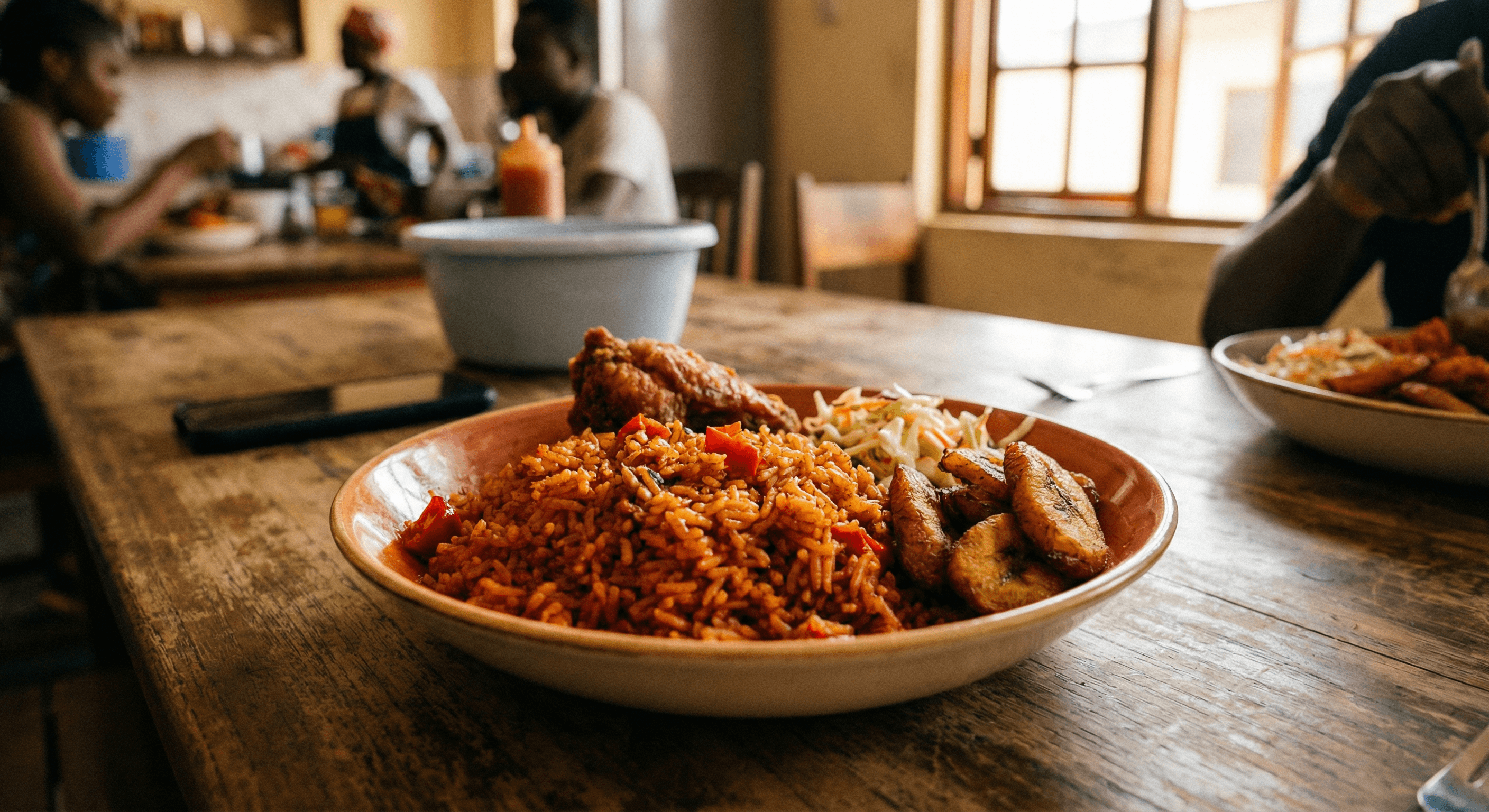
Jollof rice is one of the most famous Ghanaian dishes: long-grain rice cooked in a tomato, onion, and pepper sauce, often with chicken, beef, or fish. It’s a party and street-food favourite across West Africa.
Main ingredients: Rice, tomatoes, onions, peppers, spices, and protein (chicken, fish, or meat).
Where to find it: Restaurants, chop bars, and street stalls in Accra, Kumasi, and Cape Coast. Often sold in takeaway packs.
Why it’s popular: Filling, flavourful, and easy to share. Central to celebrations and everyday eating.
Best region: Nationwide; Accra and Kumasi have countless spots. Try it at a local chop bar for an authentic taste.
2. Fufu
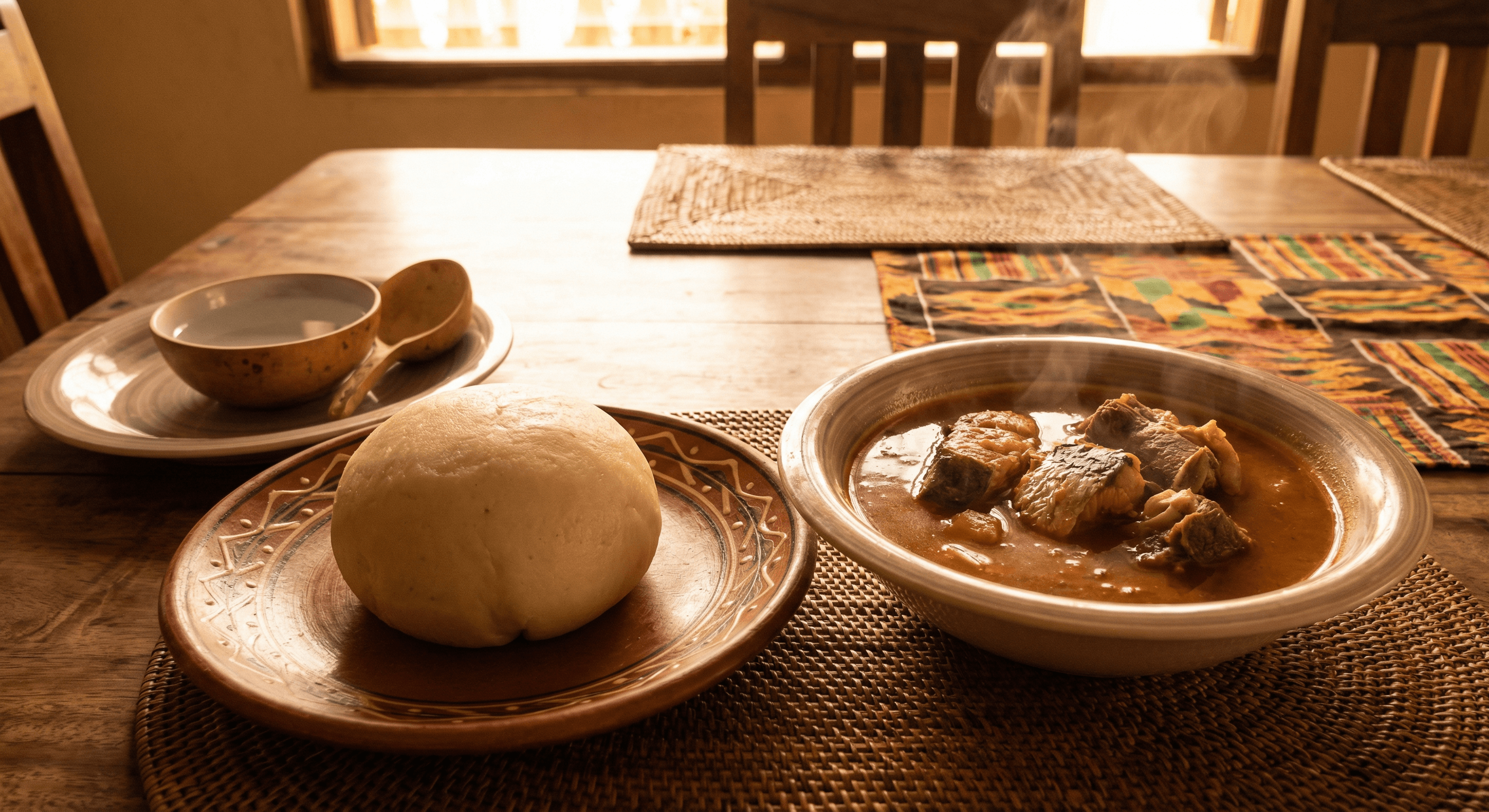
Fufu is a smooth, dough-like ball made from pounded cassava and plantain (or yam). It’s eaten with soup—light soup, groundnut soup, or palm-nut soup—and is one of the most iconic traditional foods in Ghana.
Main ingredients: Cassava, plantain (or yam), plus soup (tomato-based, groundnut, or palm nut) and fish or meat.
Where to find it: Chop bars, restaurants, and homes. Often sold as “fufu and soup” with a choice of protein.
Why it’s popular: Filling, traditional, and central to many gatherings. Eating with the hands is the norm.
Best region: Nationwide; especially common in the south and centre. Try it in Kumasi or Accra at a busy chop bar.
3. Banku and Tilapia
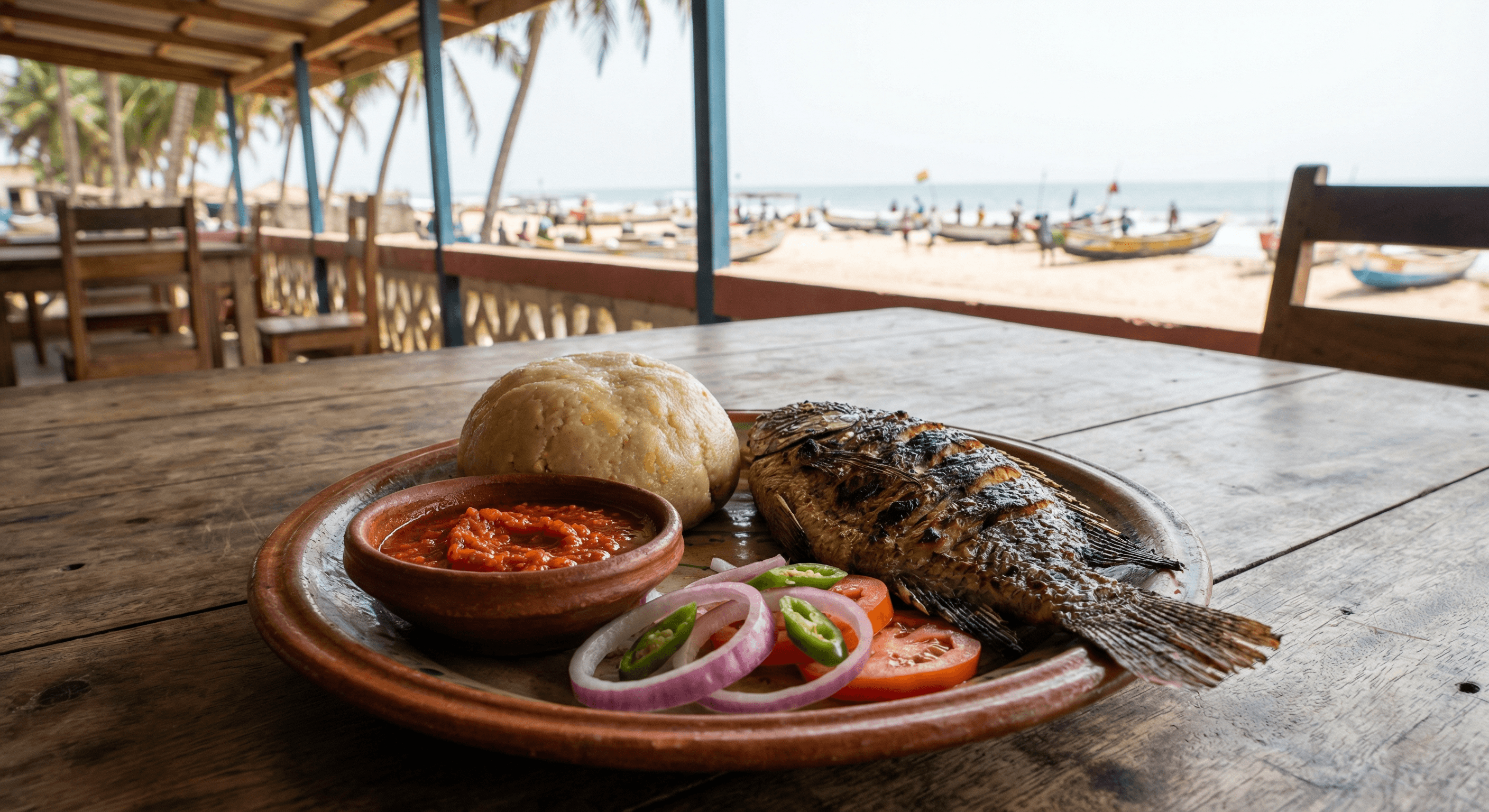
Banku is a slightly sour, smooth ball of fermented corn and cassava dough, served with grilled tilapia and hot pepper sauce (shito or fresh pepper). It’s a must-try Ghanaian food, especially along the coast.
Main ingredients: Fermented corn and cassava (banku), tilapia, onions, pepper, and sometimes okro (okra) stew.
Where to find it: Beach spots, chop bars, and restaurants in Accra, Cape Coast, and other coastal towns.
Why it’s popular: Fresh fish, bold flavours, and a satisfying mix of soft banku and crispy fish. Perfect for lunch or dinner.
Best region: Coastal areas—Cape Coast, Accra (e.g. Labadi, Jamestown), and fishing communities.
4. Waakye
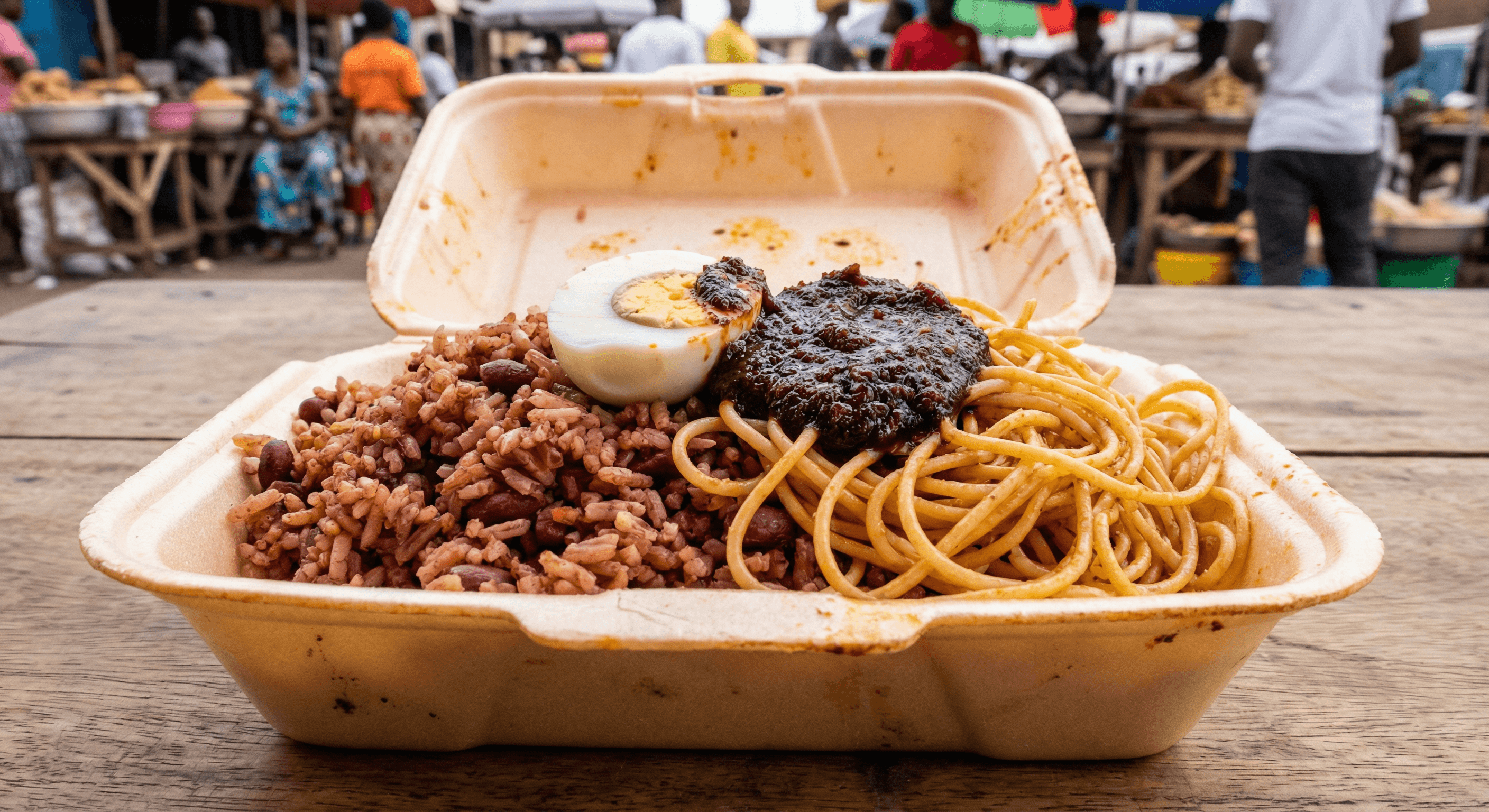
Waakye is rice and beans cooked with sorghum or millet leaves (or waakye leaves), giving it a slight colour and subtle flavour. It’s served with spaghetti, stew, shito, boiled egg, and sometimes meat or fish—a classic Ghana local food for breakfast or lunch.
Main ingredients: Rice, beans, waakye leaves (or sorghum leaves), tomato stew, spaghetti, shito, eggs, and optional protein.
Where to find it: Street vendors and chop bars, especially in the morning. Very popular in Accra and Kumasi.
Why it’s popular: Hearty, affordable, and portable. A go-to for a filling start to the day or a quick lunch.
Best region: Nationwide; Accra’s waakye sellers are famous. Look for vendors with large pots and queues.
5. Kenkey
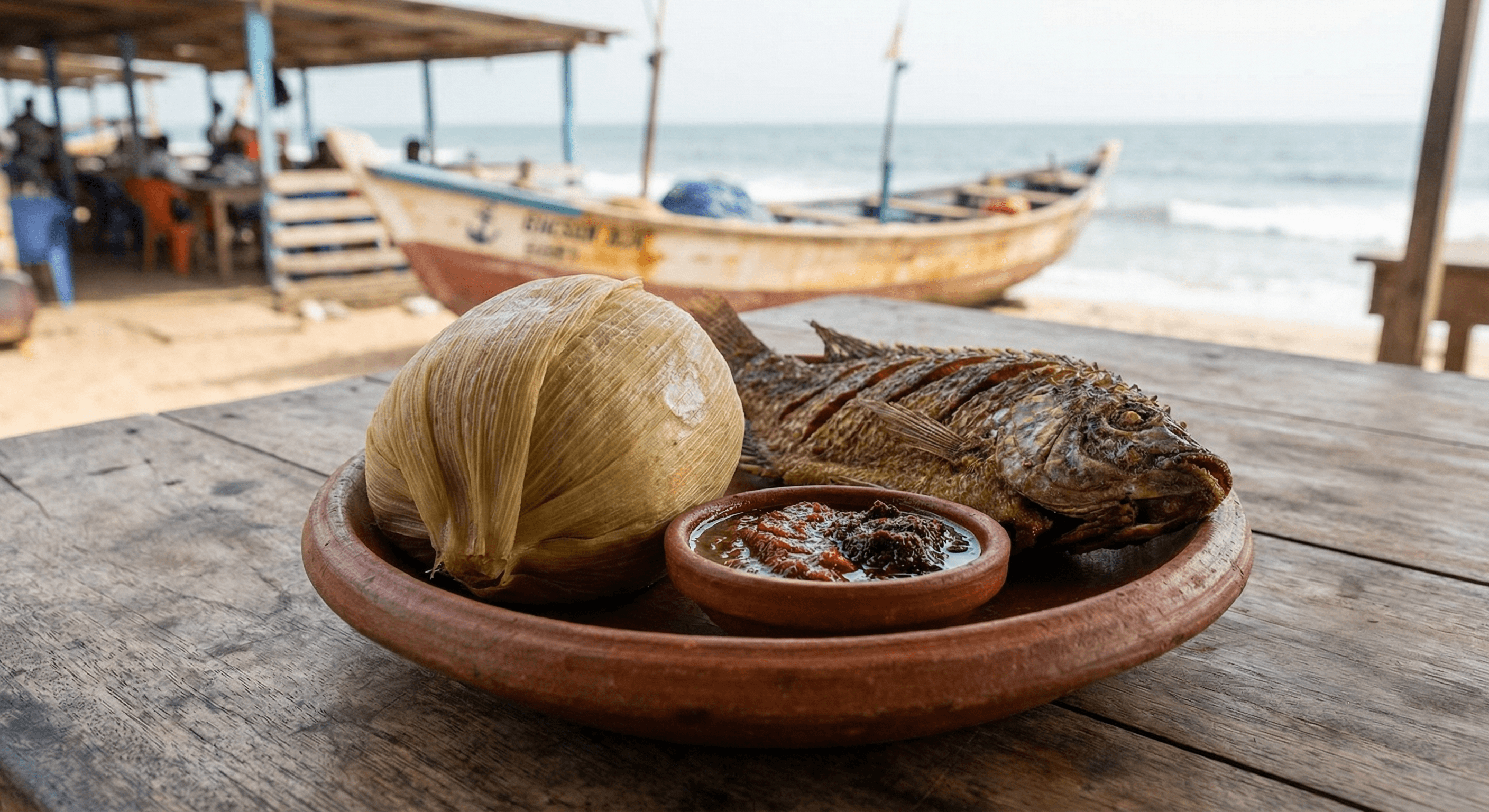
Kenkey is fermented corn dough wrapped in plantain leaves or husks and boiled. It’s served with fried fish, pepper sauce, and sometimes shito. A staple Ghanaian food along the coast.
Main ingredients: Fermented corn dough, plantain leaves, fish, pepper, onions, and shito (optional).
Where to find it: Chop bars, street stalls, and beach spots in Accra, Cape Coast, and coastal towns.
Why it’s popular: Tangy, filling, and pairs perfectly with fish and pepper. Easy to find and very affordable.
Best region: Greater Accra and Central Region. Try it with tilapia or other fried fish by the sea.
6. Groundnut Soup
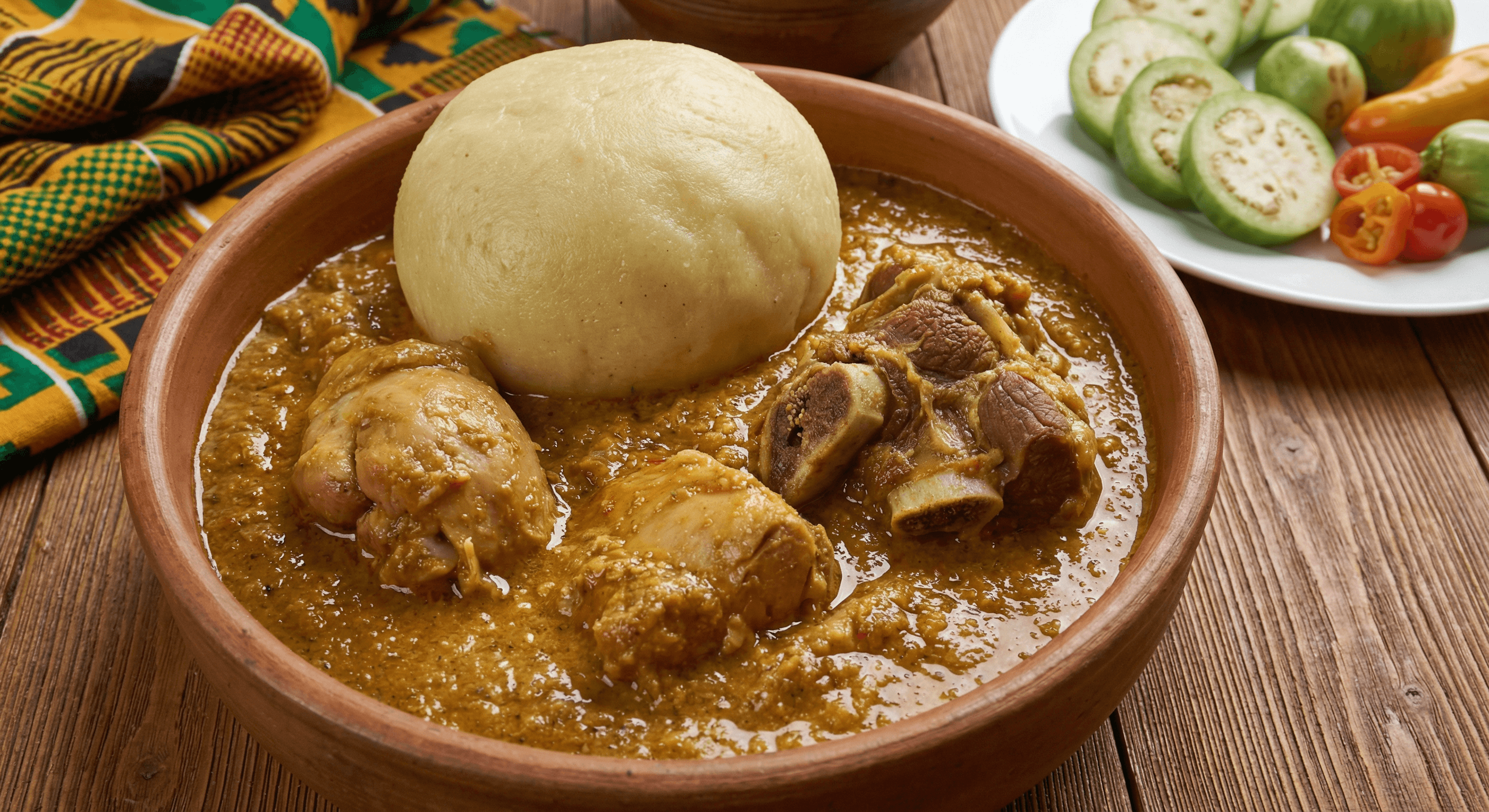
Groundnut (peanut) soup is a thick, nutty soup made with ground peanuts, tomatoes, and spices, often with chicken, beef, or fish. It’s usually eaten with fufu, rice balls, or rice—one of the most beloved traditional foods in Ghana.
Main ingredients: Groundnuts (peanuts), tomatoes, onions, pepper, meat or fish, and leafy greens (e.g. spinach).
Where to find it: Chop bars and restaurants nationwide. Often listed as “groundnut soup with fufu” or “with rice.”
Why it’s popular: Rich, creamy, and comforting. Filling and perfect with a starch.
Best region: Nationwide; try it in the north (Tamale, Bolgatanga) and in Accra and Kumasi.
7. Light Soup
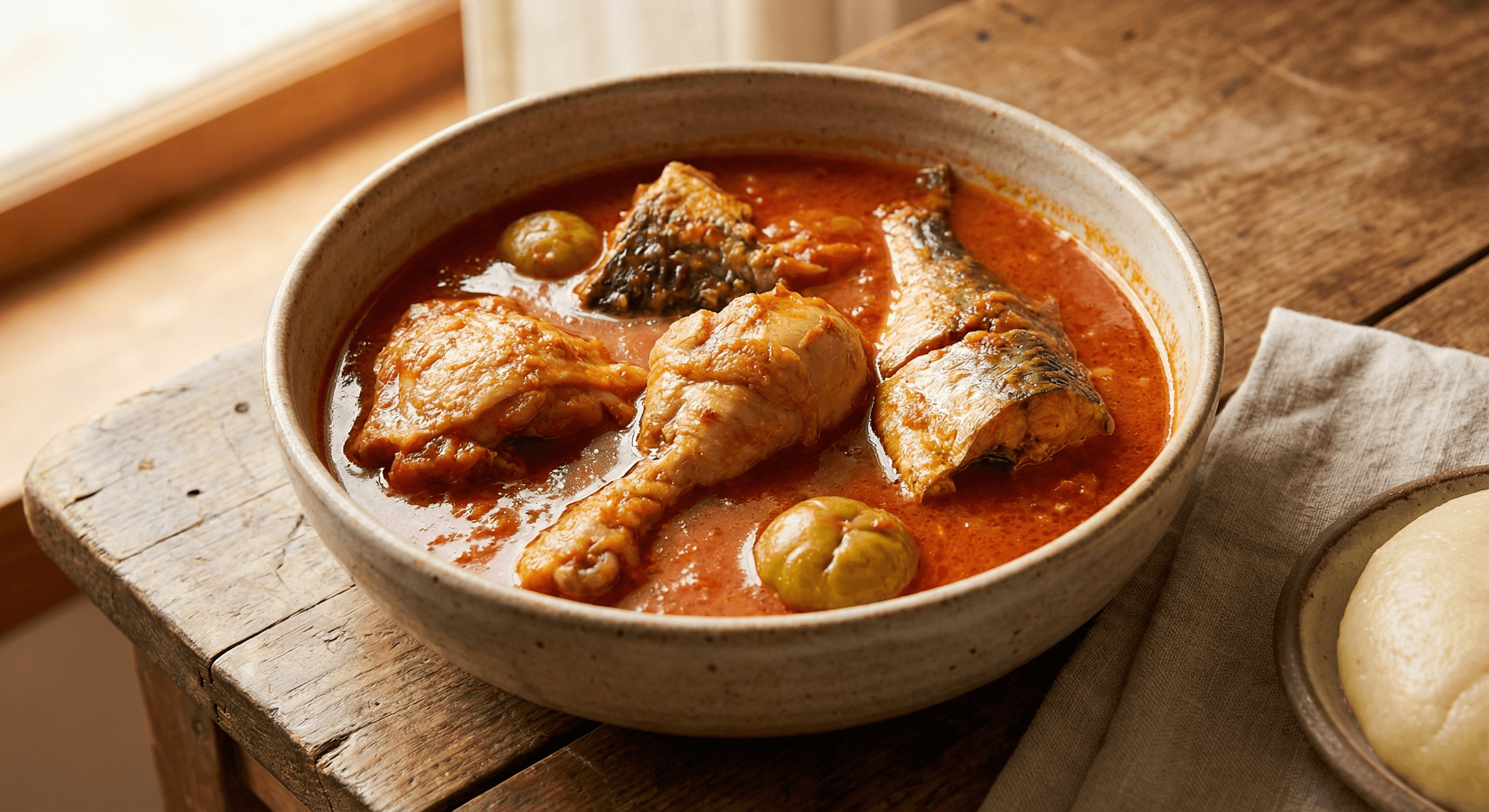
Light soup is a tomato-based, slightly spicy soup with fish, chicken, or meat, and often garden eggs (eggplant), okra, or other vegetables. It’s a everyday favourite and commonly served with fufu or rice balls.
Main ingredients: Tomatoes, onions, pepper, ginger, garlic, fish or meat, and vegetables (garden eggs, okra).
Where to find it: Chop bars and restaurants everywhere. Often on the menu as “light soup with fufu” or “with rice.”
Why it’s popular: Light but flavourful, quick to prepare, and goes with almost any starch.
Best region: Nationwide. A safe and delicious choice in any region.
8. Kelewele
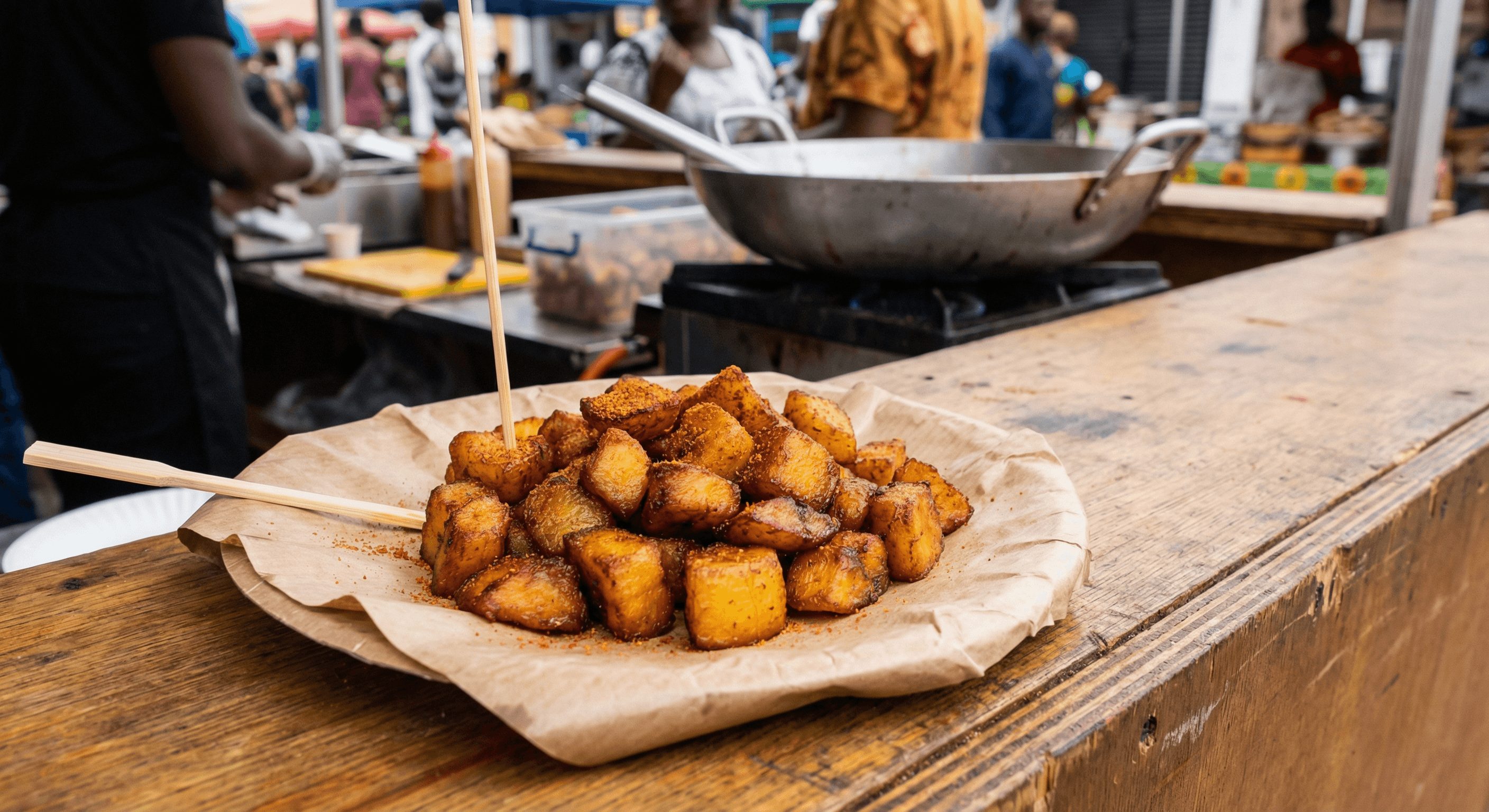
Kelewele is ripe plantain cubed, marinated with ginger, pepper, and spices, then deep-fried until golden and slightly crispy. It’s a famous Ghanaian snack and street food—sweet, spicy, and addictive.
Main ingredients: Ripe plantain, ginger, chilli pepper, onions, and spices (e.g. nutmeg, cloves).
Where to find it: Street vendors, markets, and near bars and chop bars, especially in the evening.
Why it’s popular: Quick, portable, and a perfect snack or side. Often eaten with groundnuts or on its own.
Best region: Accra, Kumasi, and other cities. Look for vendors with a frying pan and a queue.
9. Red Red
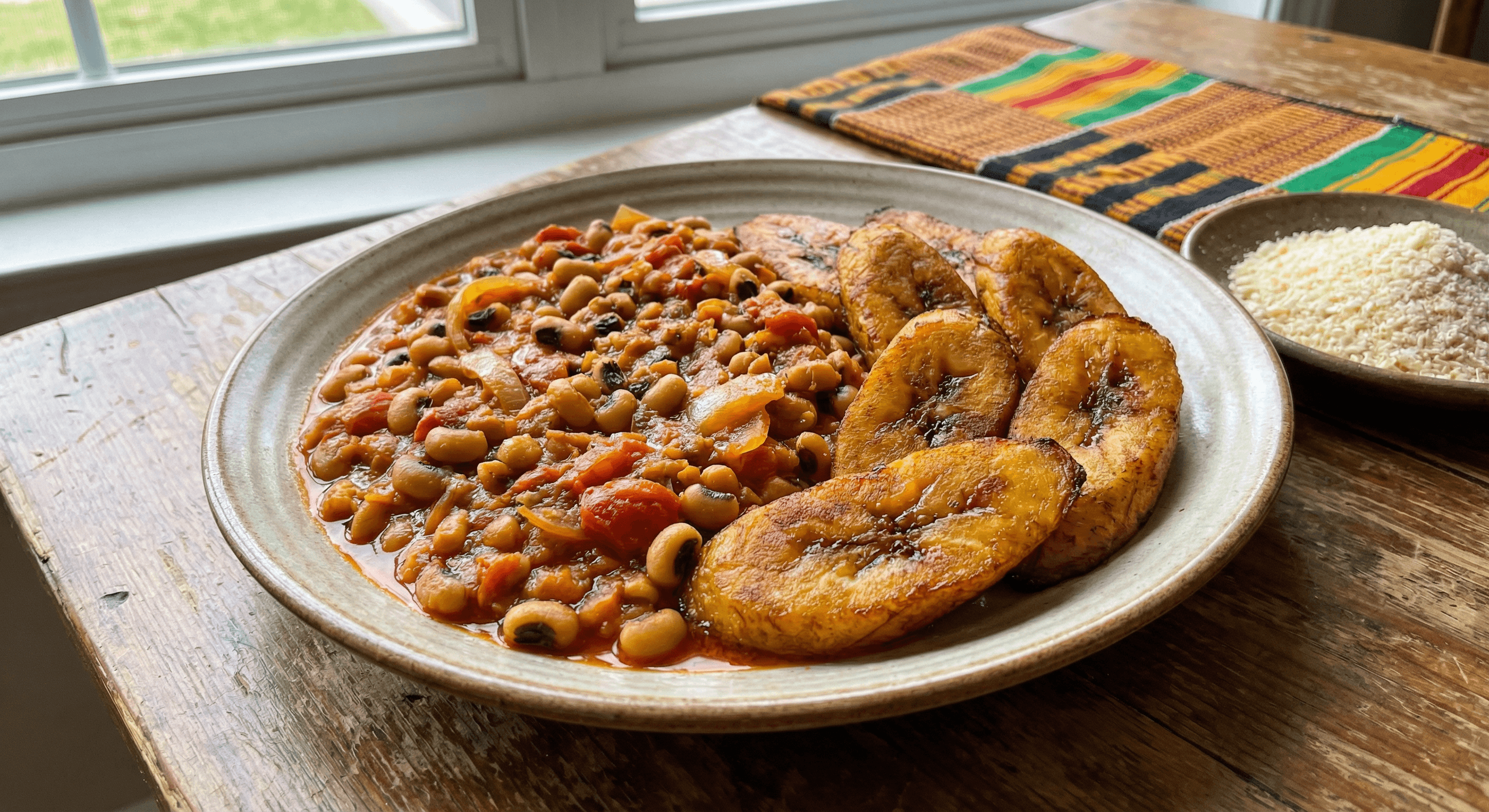
Red red is black-eyed peas (or beans) cooked in a tomato and palm-oil stew, served with fried ripe plantain. The name comes from the red colour of the stew and the plantain. It’s a filling, vegetarian-friendly Ghanaian dish.
Main ingredients: Black-eyed peas, palm oil, tomatoes, onions, pepper, and ripe plantain (fried).
Where to find it: Chop bars, street food spots, and some restaurants. Popular as lunch or a hearty snack.
Why it’s popular: Hearty, affordable, and can be made without meat. Comfort food for many.
Best region: Nationwide; common in Accra and southern Ghana. Ask for “red red” or “beans and plantain.”
10. Tuo Zaafi
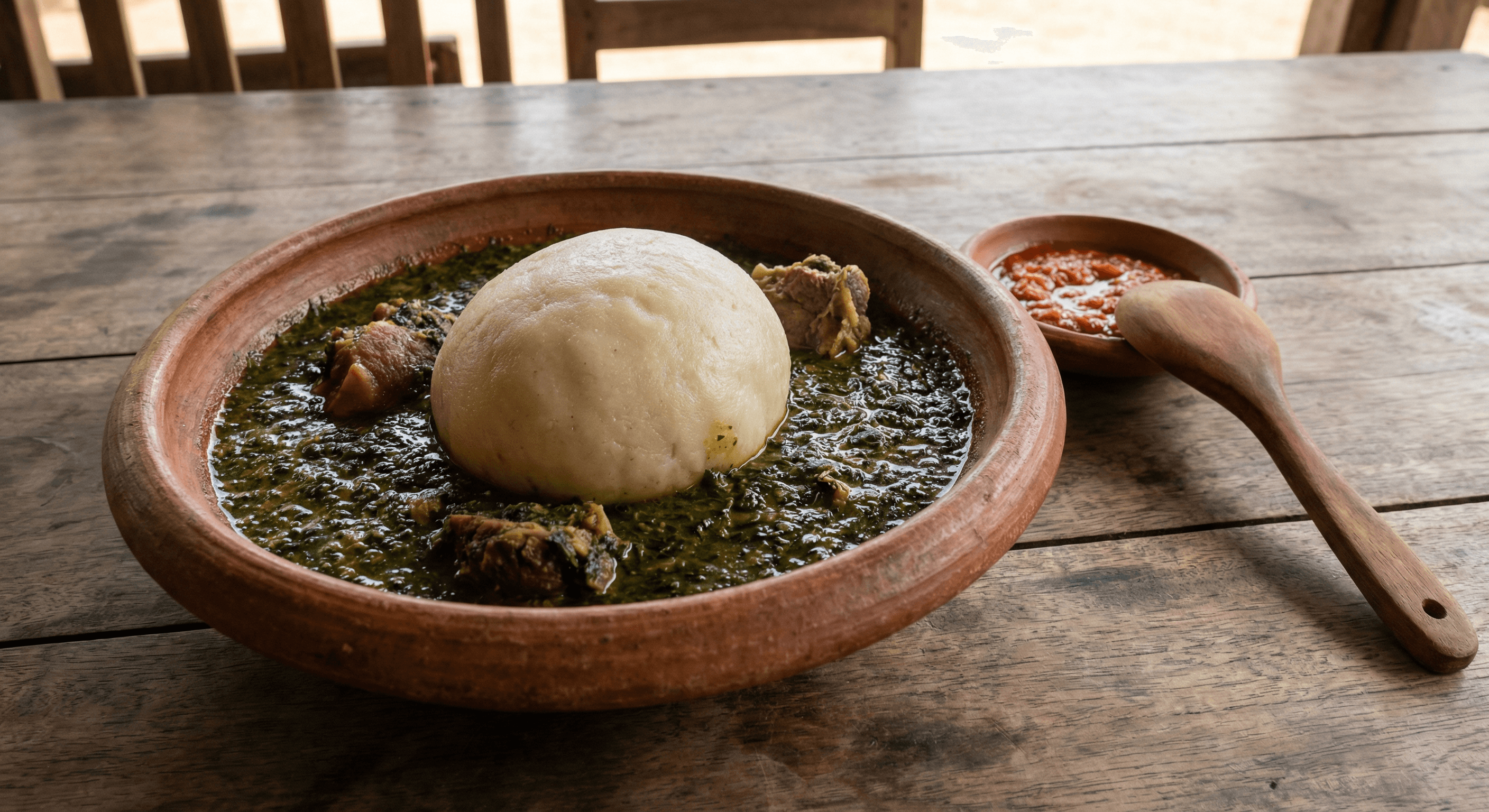
Tuo zaafi (TZ) is a smooth, sticky ball made from maize or millet, served with a green leafy soup (often ayoyo or dawadawa leaves). It’s a northern Ghana staple and one of the most distinctive traditional foods in Ghana.
Main ingredients: Maize or millet flour (tuo), green leaves (ayoyo, spinach, or dawadawa), meat or fish, and spices.
Where to find it: Chop bars and homes in the Northern, Upper East, and Upper West regions. Less common in the south but available in some Accra spots.
Why it’s popular: Nutritious, filling, and uniquely northern. The green soup is mild and aromatic.
Best region: Tamale, Bolgatanga, Wa, and other northern towns. Try it when visiting Mole National Park or the north.
More Traditional Foods & a Drink to Try
Beyond the top 10, these dishes and drinks are part of Ghana local food culture and worth seeking out.
Chinchinga (Suya)
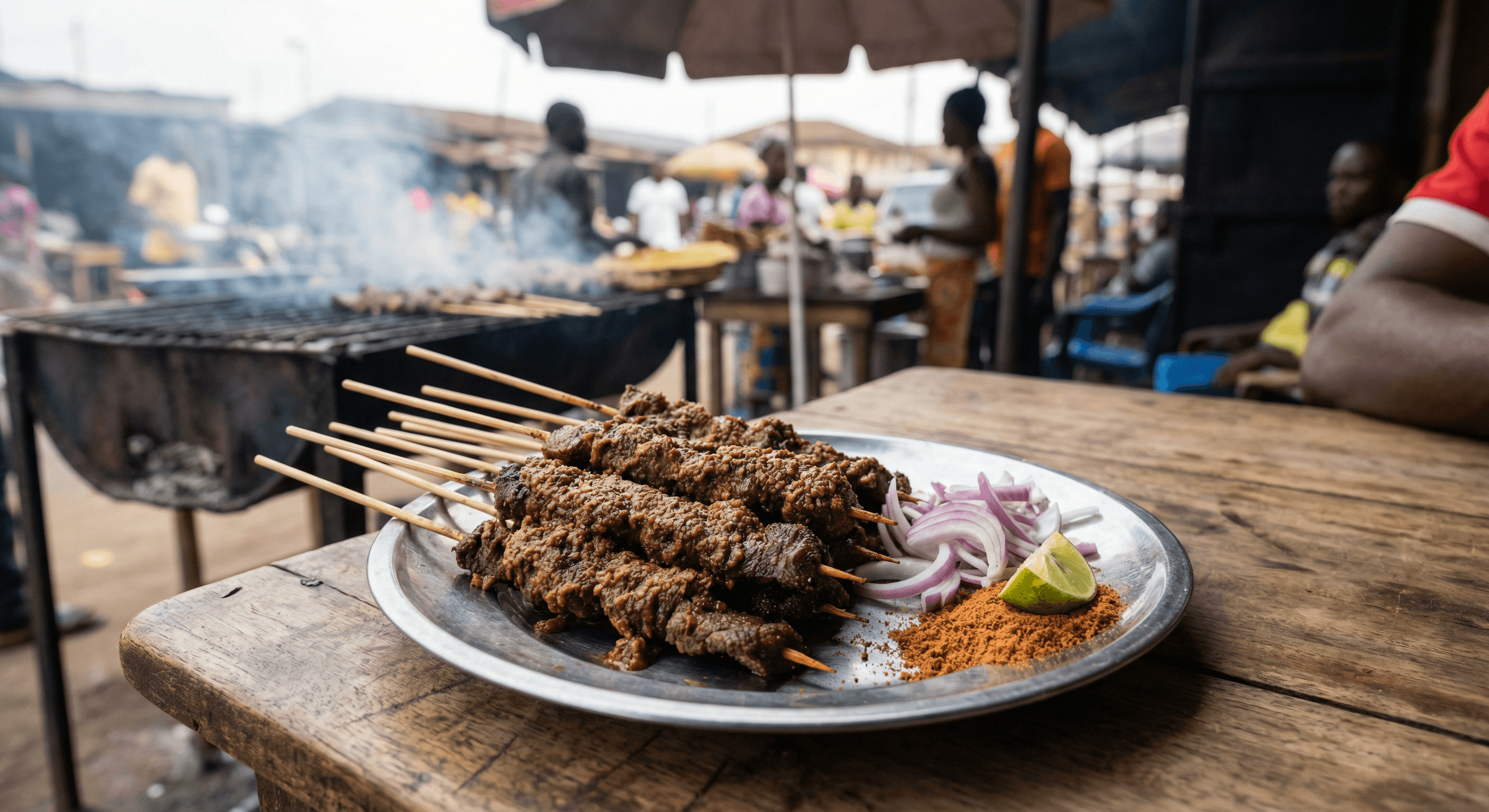
Chinchinga is Ghana’s take on suya: skewered beef (or sometimes goat or chicken) coated in a spicy peanut and spice mix, then grilled. It’s a popular street food and evening snack.
Main ingredients: Beef (or other meat), peanut powder, pepper, ginger, and spices. Served with onions and sometimes pepper sauce.
Where to find it: Street grills and vendors, especially at night, in Accra, Kumasi, Tamale, and other cities.
Best region: Nationwide; Tamale and Accra are great for chinchinga.
Ampesi
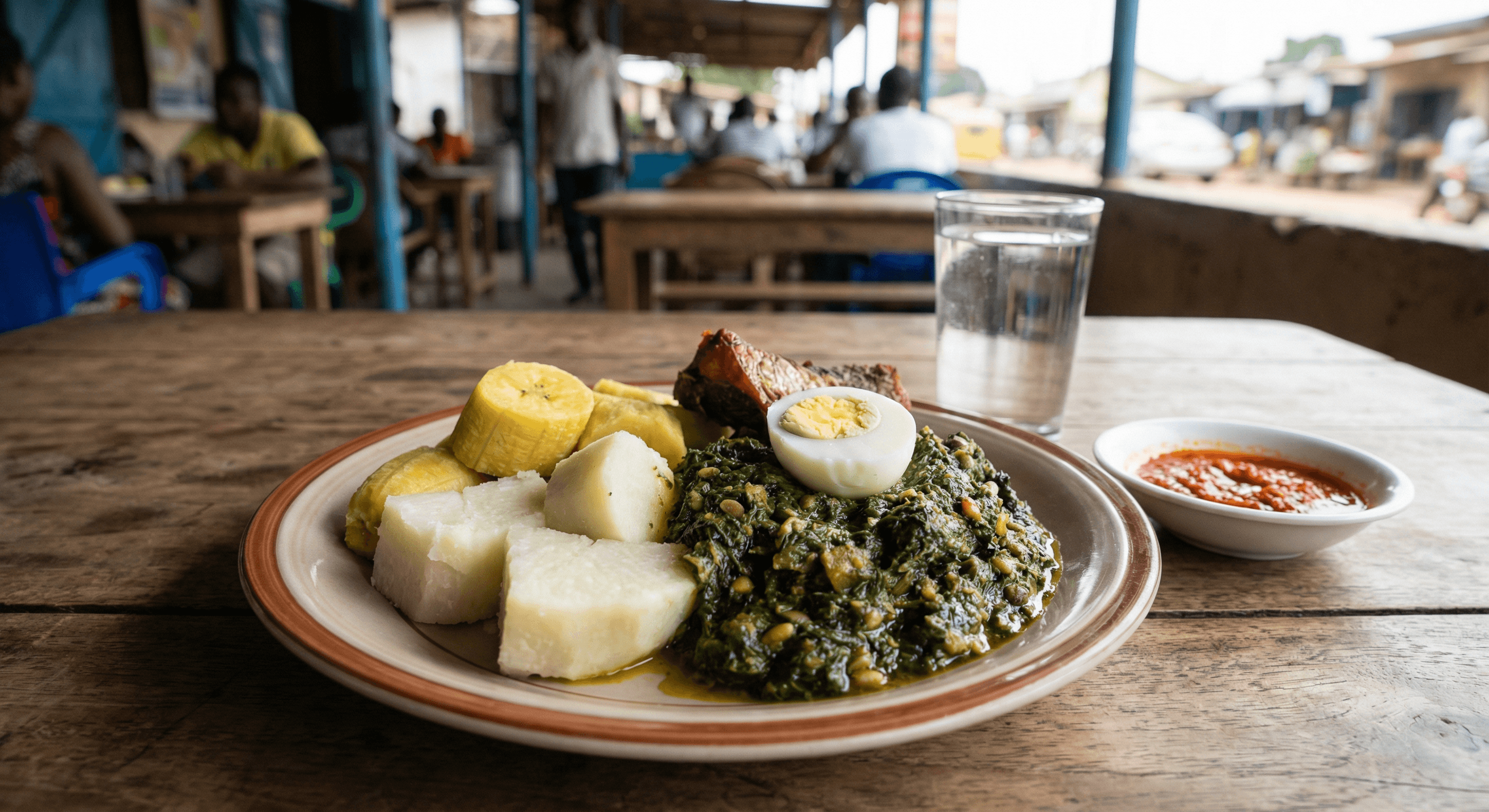
Ampesi is boiled yam, plantain, or cocoyam served with kontomire (cocoyam leaves) stew or palava sauce, often with fish or eggs. Simple, hearty, and very traditional.
Main ingredients: Yam, plantain, or cocoyam; kontomire (taro leaves); palm oil; fish or eggs.
Where to find it: Chop bars and homes, especially in southern and central Ghana.
Best region: Southern Ghana; ask for “ampesi and kontomire” in Accra or Cape Coast.
Eto
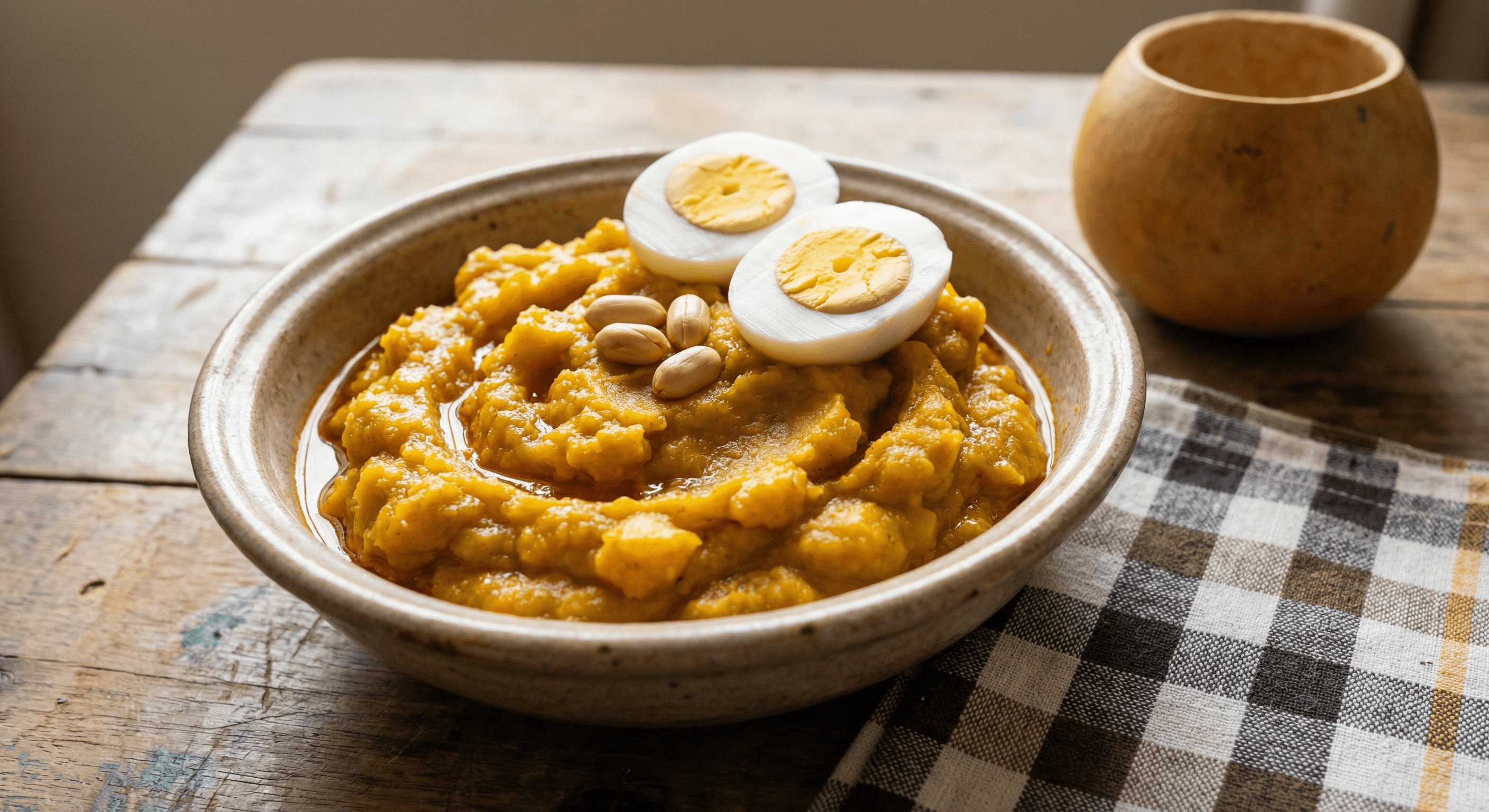
Eto is mashed boiled yam mixed with palm oil, eggs, and sometimes groundnuts. It’s a traditional dish often eaten for breakfast or as a special treat, especially in the Ashanti Region.
Main ingredients: Yam, palm oil, hard-boiled eggs, salt, and optionally groundnuts or pepper.
Where to find it: Markets, chop bars, and street vendors, mainly in the south and Kumasi.
Best region: Kumasi and Ashanti Region; also found in Accra.
Kokonte
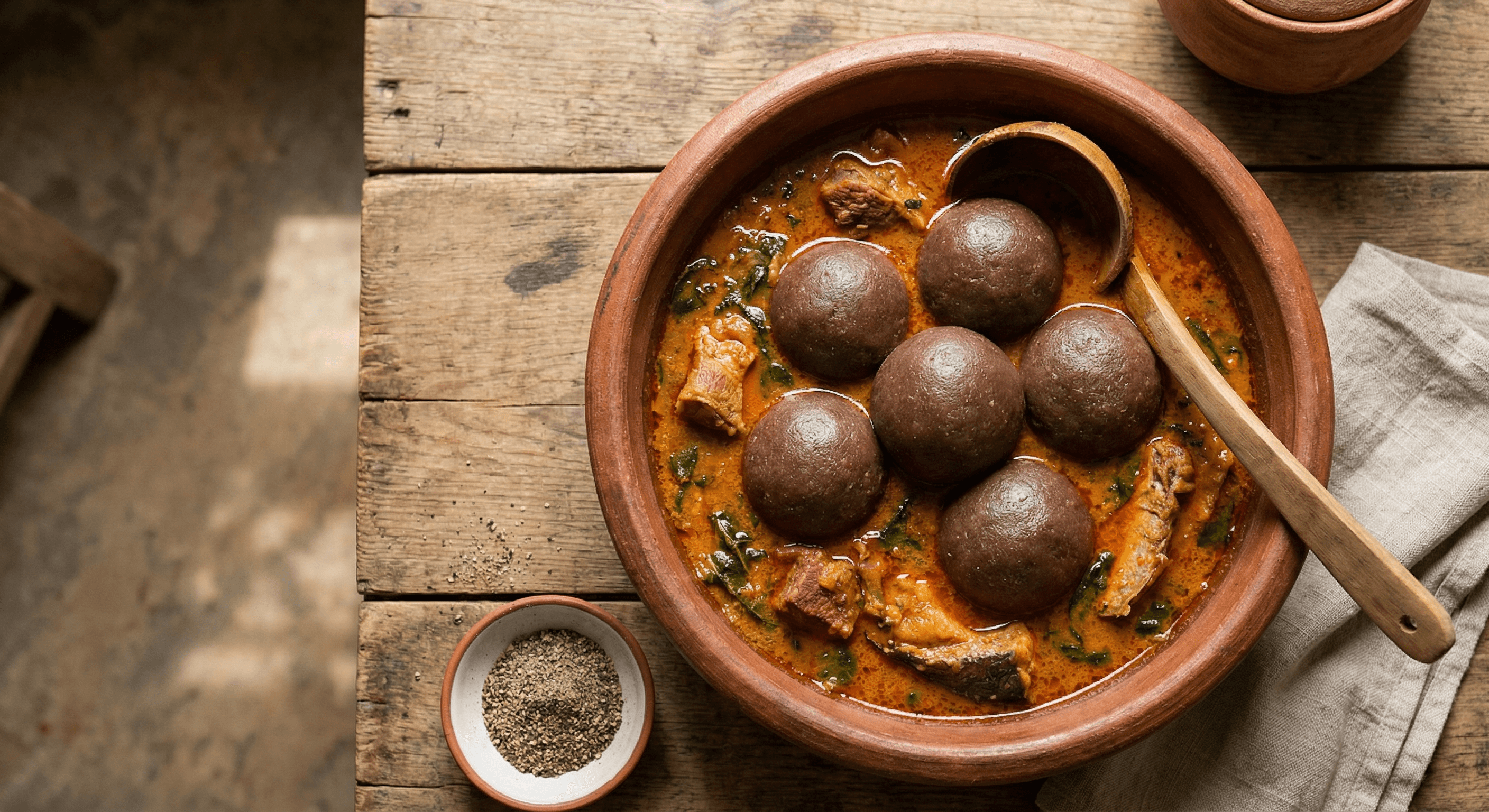
Kokonte is a dark, smooth ball made from dried cassava powder, served with soup (often groundnut or palm-nut soup) and fish or meat. It’s a northern and central Ghana staple—filling and affordable.
Main ingredients: Dried cassava (kokonte powder), soup (groundnut or palm nut), and protein.
Where to find it: Chop bars in the north and in many southern cities. Often listed as “kokonte and soup.”
Best region: Northern Ghana (Tamale, Bolgatanga) and Accra chop bars.
Sobolo (Hibiscus Drink)
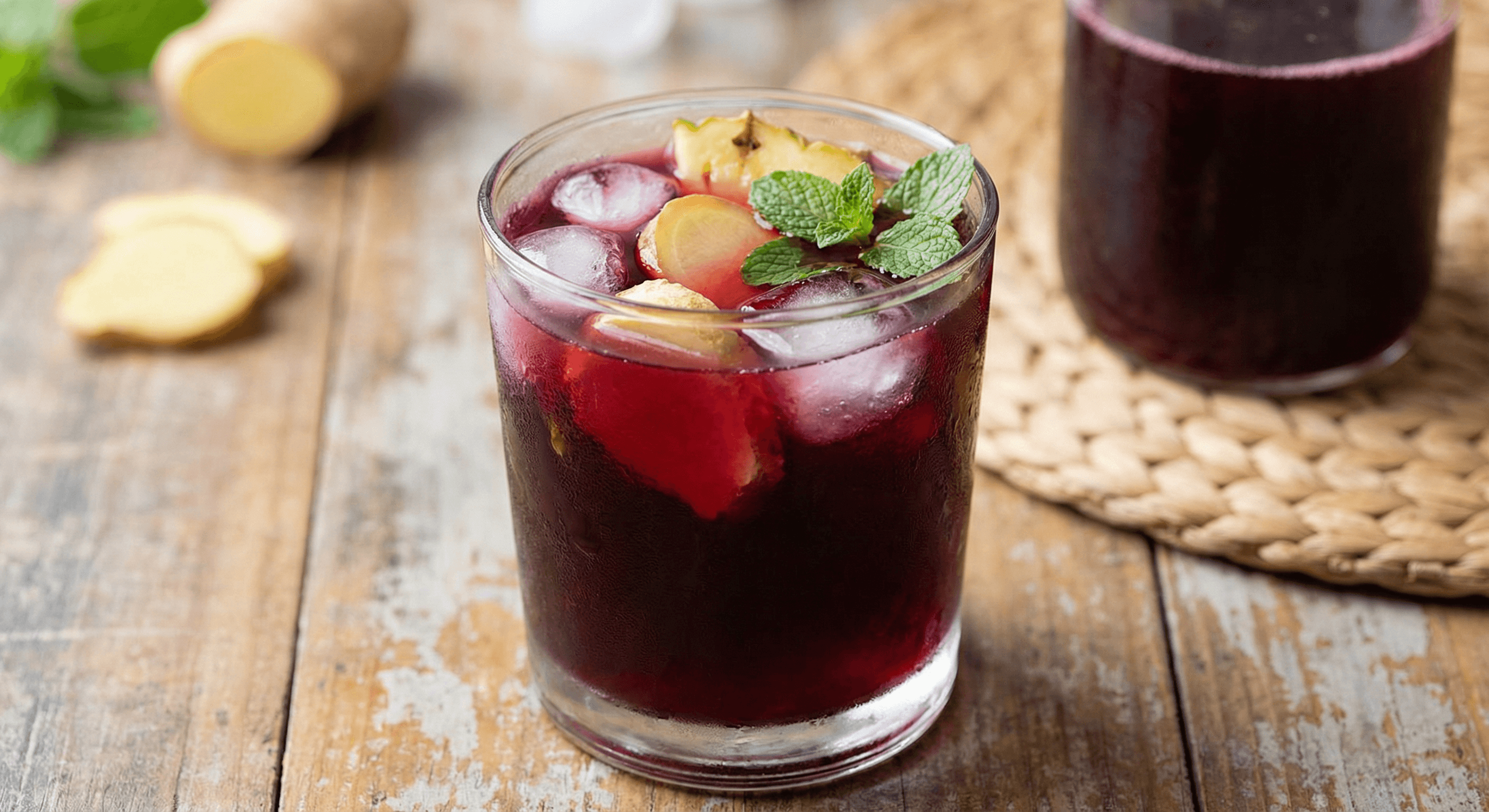
Sobolo is a refreshing drink made from hibiscus (bissap) flowers, ginger, and sometimes pineapple or sugar. It’s served cold and is a popular non-alcoholic Ghana local drink, especially in the heat.
Main ingredients: Dried hibiscus flowers, ginger, sugar, and sometimes fruit.
Where to find it: Street vendors, restaurants, and markets. Often sold in plastic bags or cups.
Best region: Nationwide. Perfect after a day of sightseeing or safari.
What Food Is Ghana Famous For?
Ghana is famous for jollof rice, fufu with soup, and banku with tilapia. Waakye, kelewele, groundnut soup, and red red are also widely recognised. Ghanaian food is known for its use of tomatoes, peppers, palm oil, and starches like cassava, plantain, and rice. Street food—waakye, kelewele, chinchinga—is a big part of the experience. When people ask what to eat in Ghana, these are the dishes that define the country’s food culture.
Is Ghanaian Food Spicy?
Ghanaian food can be spicy, but not everything is hot. Soups and stews often use chilli or pepper; kelewele and shito (pepper sauce) are on the spicier side. You can usually ask for “less pepper” or “no pepper” at chop bars and restaurants. If you’re sensitive to spice, start with milder options like waakye without extra shito, or red red, and add heat gradually.
Best Places to Try Traditional Food in Ghana
The best places to try traditional foods in Ghana are local chop bars, street vendors, and markets. In Accra, try Osu, Labadi, or Jamestown for banku and tilapia, waakye, and kelewele. Kumasi has excellent fufu and light soup spots. Cape Coast and other coastal towns are ideal for kenkey and fish. In the north (Tamale, Bolgatanga), look for tuo zaafi, groundnut soup, and kokonte. For a mix of dishes in one place, visit a busy chop bar or a food market; the busier, the fresher the food usually is.
Our where to stay page has accommodation options near major cities. For more trip planning, see Where to Go and Plan Your Safari.
Frequently asked questions about Ghanaian food
Try Local Dishes on Your Ghana Trip
Traditional foods in Ghana are a highlight of any visit. From jollof and fufu to banku and waakye, famous Ghanaian dishes are easy to find in chop bars, street stalls, and restaurants. Make room in your itinerary for at least a few local meals—they’re affordable, filling, and a real taste of Ghana.
Plan the rest of your trip with our Where to Go guide and Plan Your Safari page. For safety tips, read Is Ghana Safe for Safari Travelers?. If you’re combining food with wildlife, check out the Top National Parks in Ghana. When you’re ready to book restaurants or food experiences in Accra, use our internal links above or your preferred booking platform.